When people hear the term IVDD, it’s easy to think of it as just another veterinary condition. But behind every diagnosis is a dog, a family and a journey that can be both heartbreaking and inspiring. For Alfie and his owner, life changed in an instant. What started as an ordinary day quickly became a race to get answers, followed by weeks of recovery, rehabilitation and learning to adapt to a new normal.
Today, Alfie continues to inspire thousands of people through his social media account, helping other dog owners understand that while IVDD can be life changing, it doesn’t always mean life has to stop.
We spoke to Alfie’s owner about the day everything changed, the challenges they faced and the advice they would give to anyone whose dog has just been diagnosed.
The Day that everything Changed
No owner ever expects an ordinary day to turn into an emergency. For many families affected by IVDD, the first signs can appear suddenly and progress far more quickly than expected. We asked Alfie’s owner to take us back to the moment everything changed.
When did you first realise something wasn’t right?
“It all happened incredibly quickly. Alfie went from being his normal, happy self to showing signs of pain. At first it wasn’t obvious what was wrong, but I knew something wasn’t right. Within a matter of hours he had lost the use of his back legs.”
What symptoms did you notice?
“Initially it was an arched back and unsteadiness on his feet. As things progressed, he became weak in his back legs before becoming completely paralysed. It was terrifying how fast everything happened.”
How quickly did things change?
“One minute Alfie was enjoying a completely normal walk, and just a few hours later he was paralysed.
Before IVDD I’d never imagined a dog could go from running around normally to being paralysed in a matter of hours.”
Receiving the diagnosis
Receiving an IVDD diagnosis can be overwhelming, especially if you’ve never heard of the condition before. Between unfamiliar medical terms and difficult decisions, it can be hard to process what’s happening. We asked Alfie’s owner what that experience was really like.
What did the vets tell you?
“After being referred to a specialist, Alfie was diagnosed with a severe disc extrusion (IVDD). They explained he was a Grade 5 case, the most severe classification, and that surgery was his only chance.
Because he had lost deep pain sensation before surgery, his prognosis was guarded. We were told recovery would be difficult, there were no guarantees, and his chances of recovery were less than 20%. Despite those odds, saying no to surgery was never an option for us. We had to give him every chance we could.”
Did you understand what IVDD was?
“It was something I had researched before getting the breed, as I knew the risks were higher (around 1 in 4 dachshunds will develop IVDD during their lifetime). But you never expect it to happen to you. Suddenly I was trying to understand spinal surgery, paralysis, bladder care and rehabilitation while processing the shock that my dog might never walk again.”
The Road to Recovery
Recovery from IVDD is rarely straightforward. Whether treatment involves surgery or conservative management, it often takes weeks or even months of patience, rehabilitation and celebrating the smallest milestones. We asked Alfie’s owner about the road to recovery and the challenges they faced along the way.
What treatment did Alfie have?
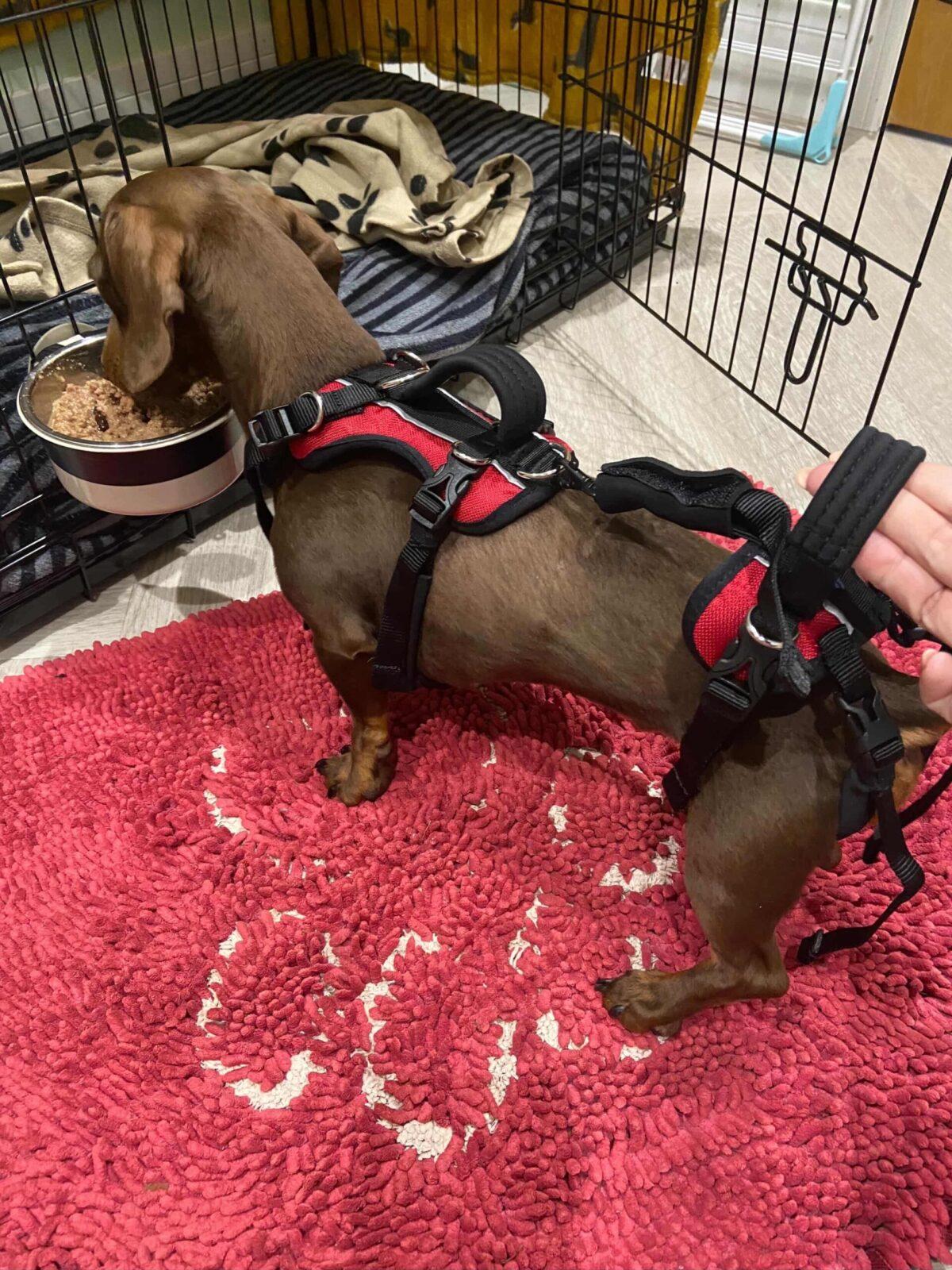
“Alfie underwent emergency spinal surgery followed by 8 weeks of strict crate rest and rehabilitation. Recovery didn’t stop after surgery—it was only the beginning. We did physiotherapy, hydrotherapy, exercises at home and learned how to care for a paralysed dog.”
What was the recovery process like?
“It was physically and emotionally exhausting. There were good days and bad days, and progress was incredibly slow. Every tiny improvement felt huge because there were weeks where nothing seemed to change.”
What milestones do you remember most?
“Regaining bladder control was one of the biggest milestones because he was initially double incontinent. Seeing small signs of feeling return in one foot was another huge moment.
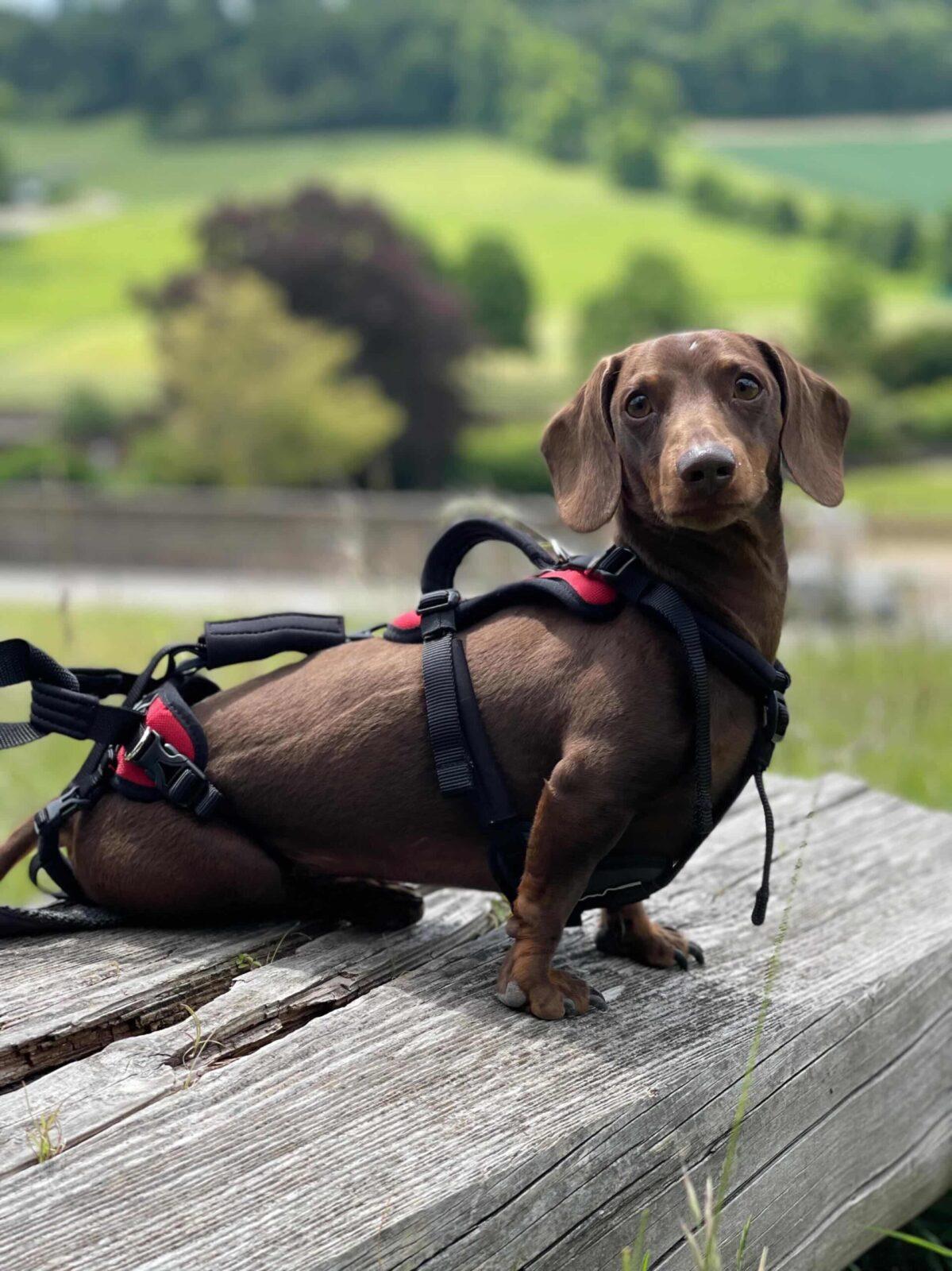
Eventually Alfie developed a spinal walk. Although it’s different from normal walking, it has given him an incredible amount of independence. Watching him take those first independent steps after believing we’d never see him walk again is a moment I’ll remember for the rest of my life.”
Life Today
Although IVDD has changed some aspects of Alfie’s life, it certainly hasn’t changed who he is. Like many dogs living with the condition, he continues to enjoy adventures, make memories and bring joy to everyone around him. We asked what everyday life looks like now.
What’s life like today?
“Life is surprisingly normal. If you met Alfie today, you’d probably notice his personality long before you noticed his disability. IVDD is part of our daily routine, but it doesn’t define Alfie. He comes on holidays, days out, adventures and even attends events like Crufts.
What adaptations have you made?
“We use a wheelchair for longer walks, boots to protect his paws, a stroller when he gets tired, ramps where possible and we always think ahead about accessibility. Those adaptations simply allow him to live the fullest life possible.”
What can Alfie still enjoy?
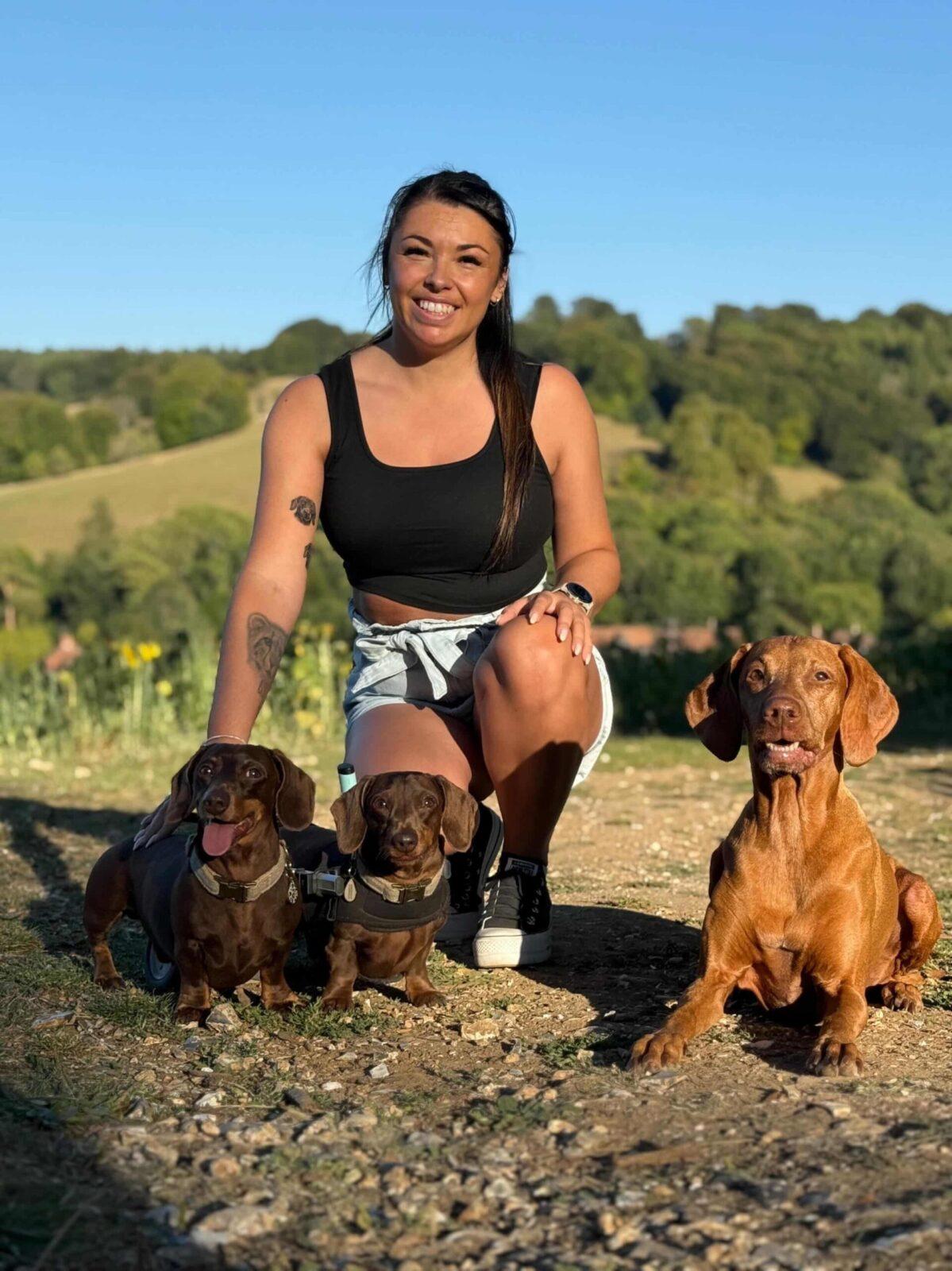
“Pretty much everything he loved before. Walks, sniffing adventures, beaches, holidays, meeting people, treats and spending time with his son Archie and sister Maisie. We don’t focus on what he can’t do – we focus on everything he still can.”
Helping Other Dog Owners
One of the most inspiring parts of Alfie’s journey has been the support he’s been able to offer other dog owners. By sharing both the difficult moments and the triumphs, his story has helped raise awareness of IVDD and reassured countless people that they aren’t facing it alone.
Why did you decide to share Alfie’s story online?
“When Alfie was diagnosed I felt completely alone and overwhelmed. There wasn’t much information available from people actually living through it. I wanted to become the page I wish I’d found during those first terrifying days.
If sharing our journey helps even one family feel less scared or gives them hope during such a frightening time, then it’s worth it.
Today, thousands of owners have found our page during their own IVDD journey, and knowing Alfie’s story has given them hope is something I’ll never take for granted.
Four years later, I still receive messages every week from owners who found our page during the darkest days of their dog’s diagnosis. Knowing Alfie’s journey has helped other families find hope has made sharing our story one of the most rewarding things I’ve ever done.”
Advice for other dog owners
Looking back on everything they’ve been through, Alfie’s owner has gained a huge amount of experience and perspective. We finished by asking what advice they would give to anyone whose dog has recently been diagnosed with IVDD.
What would you say to someone whose dog has just been diagnosed?
“Take one day at a time. Don’t compare your dog’s recovery to anyone else’s because every IVDD journey is different.
The early days are incredibly overwhelming, but dogs are amazingly resilient. Recovery can continue for months, and sometimes years, so don’t lose hope too soon.”
Is there anything you wish you’d known sooner?
“That recovery isn’t always linear. Progress often comes in tiny steps rather than huge breakthroughs.
I also wish I’d known that a happy life after paralysis is absolutely possible. I spent so much time worrying about what Alfie had lost that I couldn’t yet see everything he would still be able to do. If Alfie’s story teaches people anything, I hope it’s this: an IVDD diagnosis doesn’t have to mean the end of a happy life.”
Worth a Listen
If you’d like to learn more about IVDD, it’s well worth listening to the latest episode of the Petgevity Podcast. They chat with internationally recognised veterinary neurologist Dr Mark Lowrie about what IVDD is, the signs to look out for, treatment options and why being prepared before you ever need to be can make all the difference. It’s a fascinating listen, especially if you share your life with a Dachshund or another breed that’s more prone to the condition.